Abbey of Santa Maria

   |   
   |   
Abbey of Santa Maria

Abbey of
Santa Maria

Medieval Basilica:
an oasis of Spirituality in Follina

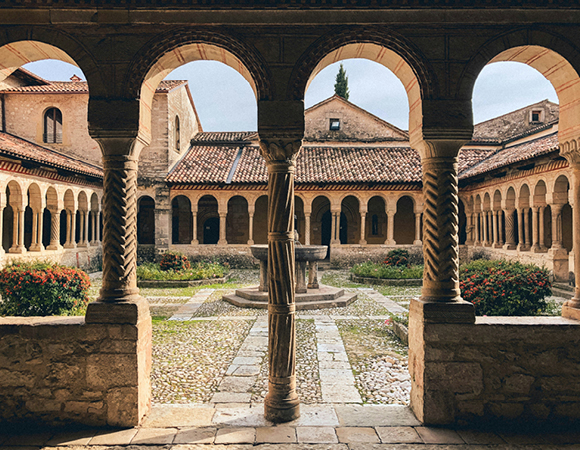
Founded in the 12th century, this basilica was for centuries an island of spirituality and peace amidst the conflicts of the medieval Venetian lordships. Built in the first half of the 14th century, many illustrious figures of the Middle Ages spent time there seeking a restful place between the human and the divine.


Among them were Countess Sofia Da Camino – buried here – who was a protagonist of the disputes for the control of the feud of Marca Trevigiana and Val Belluna, and for the possession of the Castle of Zumelle in Tiago di Mel. This area is historically a crossroads, with a long tradition of b>wool processing dating back to the Roman period, when it was crossed by the military road Claudia Augusta Altinate, dominated by the majestic Castle of Cison di Valmirano.


Land belonging to the Da Camino family, the lords of Treviso, the area also includes the Castle of Credazzo and it was the scene of the rivalry with the Collalto family for the control of Treviso. After the fall of the Serenissima, the monastery underwent progressive degradation, losing its monastic features and becoming a parish church.


Important restoration and preservation work was carried out straight after World War I, restoring the basilica to its original magnificence, preserving this precious historical and cultural heritage.

YOU MAY ALSO BE INTERESTED IN
home-articolo-brentart

Brent del’Art

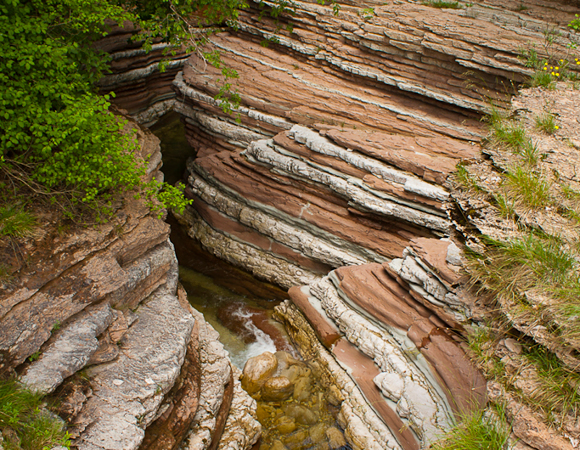
Brent de l’Art is an extraordinary canyon-like natural conformation located in Valbelluna, in the Veneto region. 23km away from our apartment complex. …
Find out more
home-articolo-follina

Abbey of Santa Maria

Founded in the 12th century, this basilica was for centuries an island of spirituality and peace amidst the conflicts of the medieval Venetian lordships. Built in the first half of the 14th century, many illustrious figures of the Middle Ages spent time there seeking a restful place between the human and the divine. …

Find out more
home-articolo-revine

Santa Maria Lake

Discover the Santa Maria and San Giorgio Lakes, a corner of Veneto rich in historical and natural charm, perfect for a journey between past and present, only 5km away from our apartment complex. …
Find out more

Battle Museum

   |   
   |   
Battle Museum

Understanding
history

Battle Museum

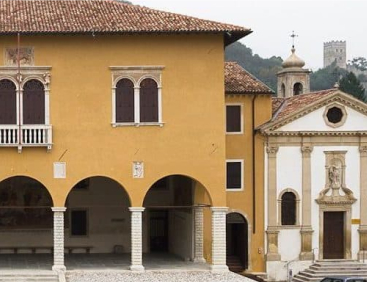
Located a few kilometres away from our apartment complex, in Piazza Giovanni Paolo I, the Vittorio Veneto Battle Museum offers a detailed overview of the World War I and the famous battle of Vittorio Veneto.


The Trench: The museum features a series of immersive scenic effects to recreate life in the trenches. The three rooms on the ground floor are set up with a continuous scenic design that recalls the architecture of the trenches of the Great War, offering a visual and captivating experience.


The Occupation: The two central rooms on the first floor explore life during the occupation. The section is dedicated to the architecture and density of an occupied city, covering topics such as multilingualism, requisitions, damage and destruction, espionage and promiscuity in the period between 1917 and 1918.


The Armoury: A side room on the second floor features “The Marson House Armoury”, where the context of the first nucleus of the museum is recreated. This section reflects the original set-up of the museum, which was previously located in the founder’s private home.


From Battle to Myth: On the second floor, the museum explores the Battle of Vittorio Veneto and the myth created around it. The section, inspired by the 19th century set-up of the first museum, presents the battle that took place between 27th and 30th October 1918 and its evolution into the symbol of national unity. The reconstruction of the original set-up is based on the 1943 pamphlet “Illustrative hints for a visit to the Battle Museum” of 1943 by Luigi Marson, the museum’s first catalogue.


Visit the Vittorio Veneto Battle Museum to dive right into the history of World War I and to find out about the importance of this crucial event in the development of the Italian national identity.

YOU MAY ALSO BE INTERESTED IN
home-articolo-brentart

Brent del’Art

Brent de l’Art is an extraordinary canyon-like natural conformation located in Valbelluna, in the Veneto region. 23km away from our apartment complex. …

Find out more
home-articolo-follina

Abbey of Santa Maria

Founded in the 12th century, this basilica was for centuries an island of spirituality and peace amidst the conflicts of the medieval Venetian lordships. Built in the first half of the 14th century, many illustrious figures of the Middle Ages spent time there seeking a restful place between the human and the divine. …

Find out more
home-articolo-revine

Santa Maria Lake

Discover the Santa Maria and San Giorgio Lakes, a corner of Veneto rich in historical and natural charm, perfect for a journey between past and present, only 5km away from our apartment complex. …

Find out more

Caglieron Caves Park

   |   
   |   
Caglieron Caves Park

An engaging
nature
experience

Caglieron Caves Park

Caglieron Caves: explore the natural and historical wonders of these caves in the Province of Treviso.

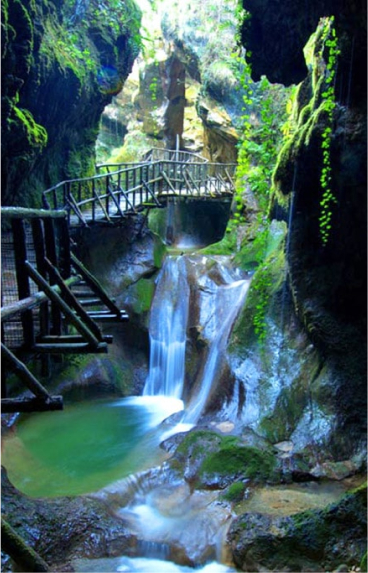
The Caglieron Caves, located in Breda di Fregona, 11 km away from our accommodations, are a complex of natural and artificial caves that fascinate for their beauty and history. The caves are formed along a deep gorge cut by the Caglieron stream, which flows through layers of limestone conglomerate, sandstone and marl from the Middle Miocene, dating back 16-10 million years. The main attractions include many waterfalls, some of which several metres high, with spectacular water basins at the bottom.

This itinerary is suitable for adults and children, but it is advisable to wear non-slip shoes.

Exploration and history of the Caglieron Caves

In the deepest part of the gorge, it is possible to admire large limestone concretions that decorate the walls, creating a landscape reminiscent of a real cave. Some of the caves were created by man to extract sandstone, known locally as “piera dolza” (soft stone), a material used since the 16th century to build jambs and architraves that can be seen in old houses and other buildings in Vittorio Veneto and the surrounding area.

The quarrying method was peculiar: with the rock layers inclined beyond 45°, stonemasons used large chisels to remove the blocks, leaving inclined columns to support the vault. This resulted in spectacular artificial caves, scattered along the gorge, at the bottom of which the Caglieron stream flows vortically and noisily. To facilitate the visit, a trail has been created from Via Ronzon, near the Visitor Centre, which crosses the stream on a footbridge.

The Caglieron Caves trail

Along the approximately 1 km route, there are many information panels about the geological and human history of the caves. Among the main stops, there is the Breda cave, characterised by typical sloping columns. A little further on, a footbridge leads to the San Lucio cave, used by the Soligo dairy factory to age cave cheese.

A bow-shaped panoramic viewpoint allows you to admire the natural gorge from above and, continuing along the walkways, limestone formations created by the mineral-rich water can be observed, with concreted surfaces and travertine alternated with mosses and plant residues. In the artificial caves, some tunnels can be explored by cavers, offering an interesting micro-environment of significant botanical and zoological interest, thanks to the constant temperature and reduced light.

Points of interest and history of the Caglieron Caves

The trail ends at an old mill, now used as a restaurant, and if you continue along the trail you will reach the Mulinetto, a two-storey historical building open to the public for exhibitions and visits. Going up the trail, you will find two renovated houses, which have become the Stone-cutter Museum, as a tribute to the ancient craft of stone working.

The trail ends on Provincial Road 151 near the Santa Barbara cave, previously used as a mushroom farm and currently being redeveloped for educational purposes. The caves that can be visited are only a part of the many caves scattered throughout the area, up to the Masarè above borgo Ciser, among which some dedicated to the Virgin Mary by locals.

Visiting the Caglieron Caves: a destination for all seasons

The Caglieron Caves are an attraction that can be visited all year round: in the summer for the coolness of the caves and in the winter for the amazing ice stalactites. Every year, thousands of visitors explore this site, also used for environmental education workshops. Since 2021, the trail has been improved to facilitate access to the “Canton” and “Fai” caves.

In 2016, thanks to a signature-gathering campaign, the caves came 3rd place in the “FAI Places I Love” ranking, making them an unmissable destination for those visiting the Veneto region. Explore the Caglieron Caves to discover a fascinating combination of nature, history and adventure!
YOU MAY ALSO BE INTERESTED IN
home-articolo-brentart

Brent del’Art

Brent de l’Art is an extraordinary canyon-like natural conformation located in Valbelluna, in the Veneto region. 23km away from our apartment complex. …

Find out more
home-articolo-follina

Abbey of Santa Maria

Founded in the 12th century, this basilica was for centuries an island of spirituality and peace amidst the conflicts of the medieval Venetian lordships. Built in the first half of the 14th century, many illustrious figures of the Middle Ages spent time there seeking a restful place between the human and the divine. …

Find out more
home-articolo-revine

Santa Maria Lake

Discover the Santa Maria and San Giorgio Lakes, a corner of Veneto rich in historical and natural charm, perfect for a journey between past and present, only 5km away from our apartment complex. …

Find out more